
On this page
The short answer
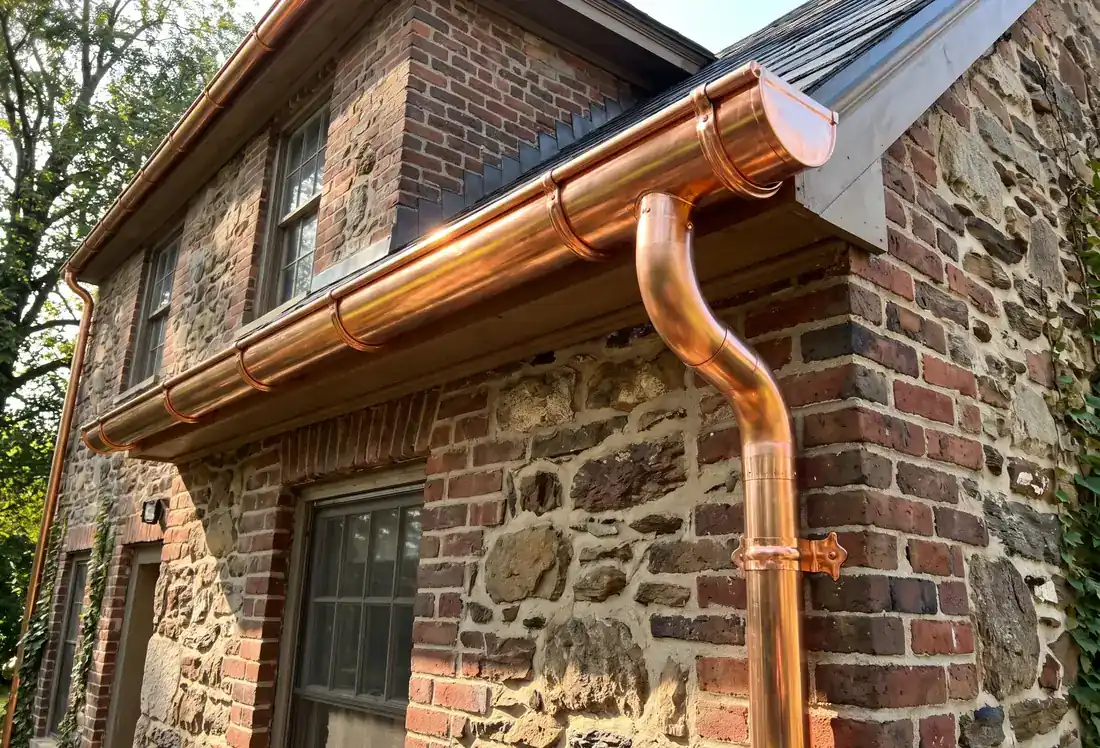
Seamless aluminum suits most Durham houses. Steel is stiffer and handles small impacts better but rusts once scratched. Copper costs several times as much and lasts for decades, and suits historic and high-end homes.
Comparison
| Aluminum | Galvanized steel | Copper | |
|---|---|---|---|
| Installed price per foot | about $9 to $13 (5-inch) | about $8 to $20 | about $30 to $50 |
| Lifespan | 20 years or more | Shorter once coating breaks | Many decades |
| Rust | No | Yes, at scratches and seams | No; patinas |
| Weight | Light | Heavy | Moderate |
| Dent resistance | Fair (better at .032) | Good | Good |
| Joints | Sealed | Sealed or soldered | Soldered |
| Colors | Many baked-on colors | Painted or galvanized | Natural copper |
| Best for | Most houses | Where impact strength matters | Historic and high-end homes |
Weighing them for Durham
Falling limbs. Durham's aging 1930s street oaks and its pines drop limbs in thunderstorms and ice. Steel resists small dents better, but a big limb damages anything. Thicker .032 aluminum and close hanger spacing are a practical middle ground.
Heat and cold. Aluminum expands and contracts more than steel, which works sealant loose at the corners over the years. Copper's soldered joints avoid the problem.
Humidity and moisture. Steel's weak point is rust, which starts where the coating is scratched or where wet debris sits. Gutters full of wet needles and leaves keep steel damp for weeks.
Old fascia. On mill houses and bungalows where the fascia is original, aluminum's light weight is kinder to the wood.
Which houses suit which
| House | Suggested material |
|---|---|
| Ranch, Colonial or new build | Seamless aluminum, 5 or 6 inch |
| Queen Anne or bungalow in a historic district | Half-round aluminum or copper |
| Large period house in Forest Hills or Hope Valley | Copper or half-round aluminum |
| House under big oaks | .032 aluminum or steel, close hangers |
| Metal outbuilding or workshop | Steel box gutter |
Checklist before choosing
- Is the house in a local historic district?
- How heavy is the tree cover over the roof?
- How long do you plan to stay?
- Is the fascia original wood?
- What does your HOA allow?
See aluminum gutters, copper gutters and half-round gutters.
What about zinc and vinyl?
| Material | Notes |
|---|---|
| Zinc | Long-lasting, used on some high-end and European-style homes; less common locally |
| Vinyl sectional | Cheap, DIY-friendly, but tends to crack and sag over years of heat and cold |
| Galvalume steel | Steel coated with an aluminum-zinc alloy; resists rust better than plain galvanized |
Matching material to the fascia
A heavy steel or copper system on soft old fascia is asking for trouble. On Durham's older houses, the right sequence is: repair the wood, then choose the gutter. If the house is in a local historic district such as Morehead Hill, the choice may also need to suit the district's guidelines.
Common mistakes
- Mixing copper with aluminum at flashing, fasteners or downspouts.
- Choosing thin aluminum under big trees, where .032 inch would resist dents better.
- Painting over rust on steel without treating it; the rust keeps spreading.
Material by Durham house
| House | Suggested | Why |
|---|---|---|
| Queen Anne in Cleveland-Holloway | Copper or painted aluminum half-round | Period look; copper lasts decades |
| Bungalow in Trinity Park | Aluminum half-round | Light on old wood; matches style |
| Brick ranch in Parkwood | .027 or .032 aluminum K-style | Affordable, many colors |
| Large home in Treyburn | .032 aluminum, sometimes copper accents | Durability, appearance |
| Metal barn in Bahama | Steel box gutter | Strength on a big roof |
Lifespan in practice
Lifespan depends as much on maintenance as material. An aluminum gutter kept clean, pitched and sealed at the corners will usually outlast a neglected steel one by years. A copper gutter with soldered joints can go decades with little more than cleaning. The weak point of every material is the same: water sitting where it should not, in the trough, behind the gutter or at the foundation.
Questions to ask
- Why this material for my house?
- What thickness or weight?
- What fasteners, and are they compatible?
- What is the warranty on the material and on the work?