
On this page
- The short answer
- What the state says
- How gutter problems create moisture
- Durham's clay makes it worse
- What to check
- When work uncovers damage
- Checklist
- Termite swarms and what they mean
- Gutter work and your termite bond
- Common mistakes
- Houses at most risk in the Durham area
- A simple yearly routine
- Questions to ask a gutter contractor
The short answer
Termites need moisture. Gutters that leak behind themselves, overflow down the fascia or dump water beside the foundation keep wood and soil wet, which is what subterranean termites look for. In North Carolina, where NC State Extension says Eastern subterranean termites live in every county, fixing gutter and downspout problems is part of protecting the house.
What the state says
| Source | What it says |
|---|---|
| NC State Extension | Eastern subterranean termites are found in all North Carolina counties |
| NC Department of Agriculture, Structural Pest Control | Increasing crawl space ventilation, adding rain gutters and grading to direct surface water away from the house may help resolve moisture conditions |
| NC wood-destroying insect report guide | Conducive conditions include wood in soil contact, cellulose debris under the house and excessively wet wood, at 20 percent moisture or more |
How gutter problems create moisture
| Gutter problem | Where the water goes | Termite-friendly result |
|---|---|---|
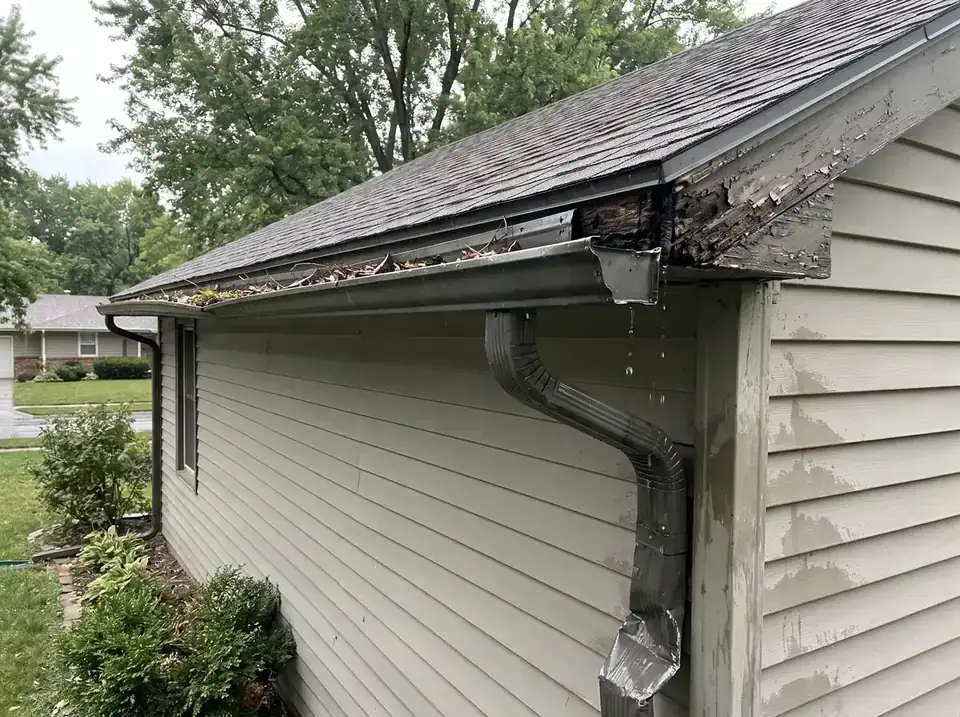
| No drip edge, gutter set low | Behind the gutter onto fascia | Wet fascia and rafter tails |
| Leaking corners | Down the fascia and siding | Soft wood at the eave and sill |
| Overflow in storms | Down the wall to the foundation | Wet soil at the foundation |
| Short or missing extensions | Beside the foundation | Damp crawl space, wet sills |
| Blocked buried lines | Backs up at the ground joint | Saturated soil by the wall |
Durham's clay makes it worse
Water that would soak away in sandy soil sits on clay. The North Carolina Geological Survey marks the Triassic basins and Carolina terrane, both found in the Durham area, as having more shrink-swell clay. Downspout water left at the wall keeps that clay, and the crawl space above it, wet for days.
What to check
- Fascia: peeling paint, dark stains, soft spots.
- Soffit: stains or sagging panels below gutter runs.
- Siding and sills: stains and soft wood near corners and downspouts.
- Foundation: pooling, washouts, mud tubes on the walls.
- Crawl space: damp soil, wet joists, standing water after rain.
- Downspouts: where each one discharges, and how far out.
When work uncovers damage
If a contractor removing old gutters or fascia finds channeled wood, mud tubes or live insects, they should stop and show you. Photograph it. Pest control companies in North Carolina are licensed by the NC Department of Agriculture; call one before the wood is replaced and covered, so they can see and treat the area.
Checklist
- Fix leaking corners and gutters set too low
- Add or extend drip edge
- Carry downspout water several feet out and downhill
- Keep soil and mulch sloping away from the wall
- Check the crawl space after heavy rain
- Tell your pest control company about wood repairs
See fascia and soffit repair and red clay and foundations.
Termite swarms and what they mean
NC State Extension notes that North Carolina's native subterranean termites begin swarming in late winter and continue into spring. Swarmers outdoors are a normal part of the environment; swarmers inside the house mean a colony is feeding nearby. Either way, a damp crawl space or wet fascia makes the house more attractive.
Gutter work and your termite bond
Many North Carolina homes have a termite bond or service agreement with a licensed pest control company. Before major wood repair at the eaves or changes to grading and drainage near the foundation, tell the company. They may want to inspect, and some agreements have conditions about changes near the foundation.
Common mistakes
- Covering damaged wood with new fascia or aluminum wrap without having it inspected.
- Letting downspouts dump at the foundation on the termite company's side of the house.
- Building mulch beds up against siding, which holds moisture and gives termites a hidden path.
Houses at most risk in the Durham area
- Mill houses and early 1900s homes in Old West Durham, East Durham and Walltown, with low crawl spaces and original wood.
- Victorian houses in Cleveland-Holloway and Old North Durham with built-in gutters and no drip edge.
- Creek-side houses in Northgate Park where the ground stays wet.
- Any house with downspouts dumping at the foundation and mulch piled against the siding.
A simple yearly routine
| When | Check |
|---|---|
| Late winter | Look for swarmers indoors; check crawl space for damp |
| Spring | Flush gutters; check corners for drips; check extensions |
| Summer | Watch gutters in a storm; look for overflow lines |
| Fall | Clean gutters after leaf and needle drop; probe soft fascia |
Questions to ask a gutter contractor
- Will you probe the fascia before hanging anything?
- If you find damaged wood, will you stop and show me?
- Where will each downspout discharge, and how far from the foundation?
- Can you add drip edge where water is getting behind the gutter?